PLANNING VIDEO FOR TEACHERS
Ken's short guide for teachers — watch once, then use the steps below as a quick reminder.
- Get ready: collect a bowl, spoon, lunch box, umbrella, paper towel and washing-up bowl of water.
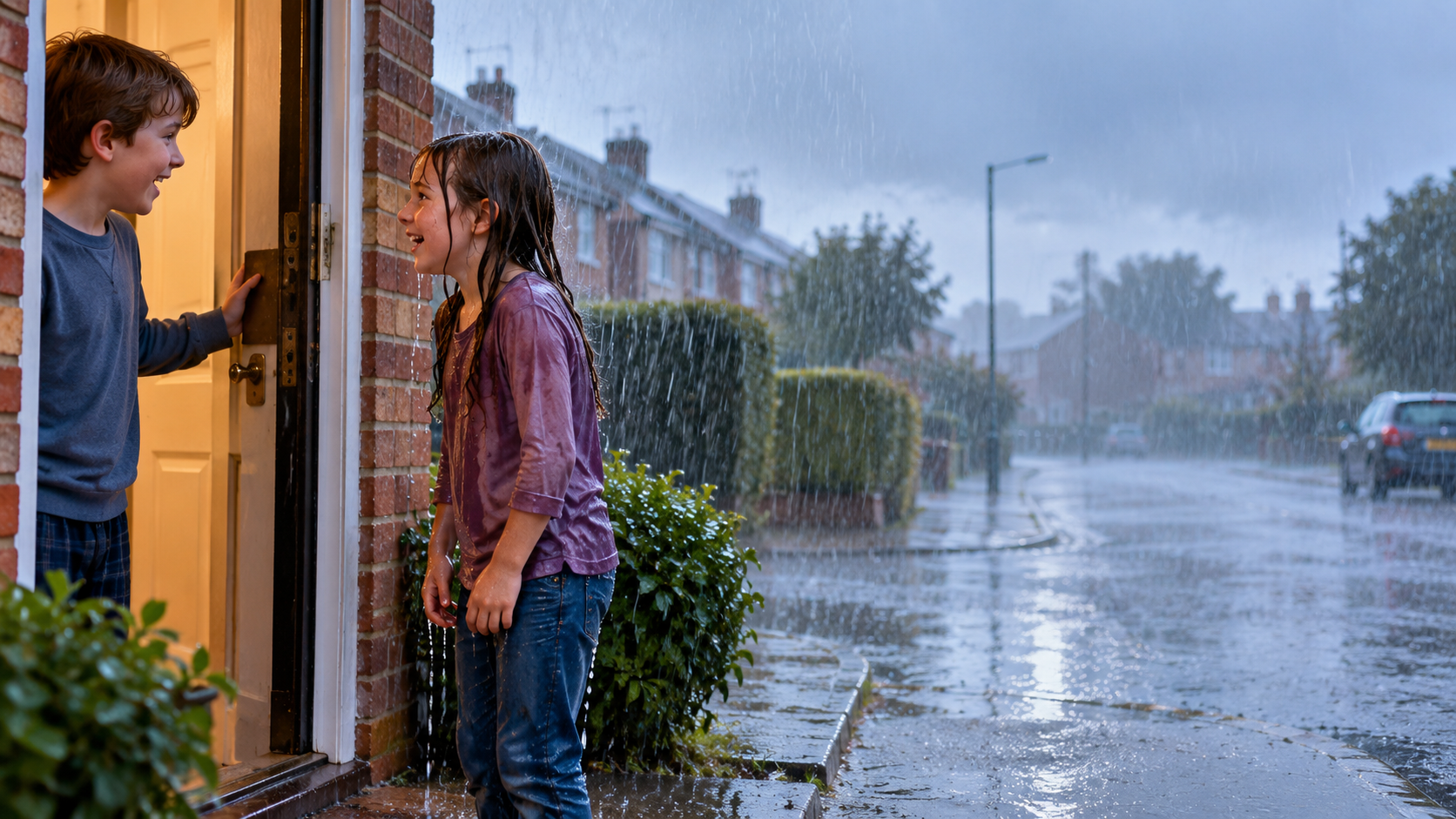
- Start with the mystery picture: why is one child wet and the other dry?
- Ask: what does “waterproof” mean? Children say or write their ideas.
- Predict and test: which objects absorb water? Test safely, keeping the paper towel until last.
- Play Ken's main lesson: discuss waterproof and absorbent afterwards.
- Apply: find waterproof surfaces and coatings around the classroom or school.
- Extend if useful: use the extra Ken video, textbook or library; add a challenge or English story when available.
You're the teacher. Ken is here to help. Choose the activities that suit your class.
Waterproof or absorbent
Words to learn: waterproof • absorbent • pores • repel
WHAT IS THE PROPERTY?
Absorbent materials take water into tiny spaces. Waterproof materials stop water passing through.
HOW CAN WE TEST IT?
Put the same amount of water on equal-sized samples and compare how much is absorbed and how much remains.
WHY DOES IT MATTER?
Towels need to absorb water. Raincoats, roofs and many kitchen surfaces need to keep water out.
1. WATCH KEN EXPLAIN
2. CAN YOU MEET THIS CHALLENGE?
Ken shows how coatings protect everyday materials. How many more can you find?
TRY THE CHALLENGE
Use what you have learned to investigate waterproof materials.
OPEN THE CHALLENGEENGLISH — READING, WRITING & DISCUSSION
Explore a story or adventure and use it for discussion, retelling or writing.
OPEN THE STORY3. LET'S SUMMARISE WHAT WE'VE LEARNED
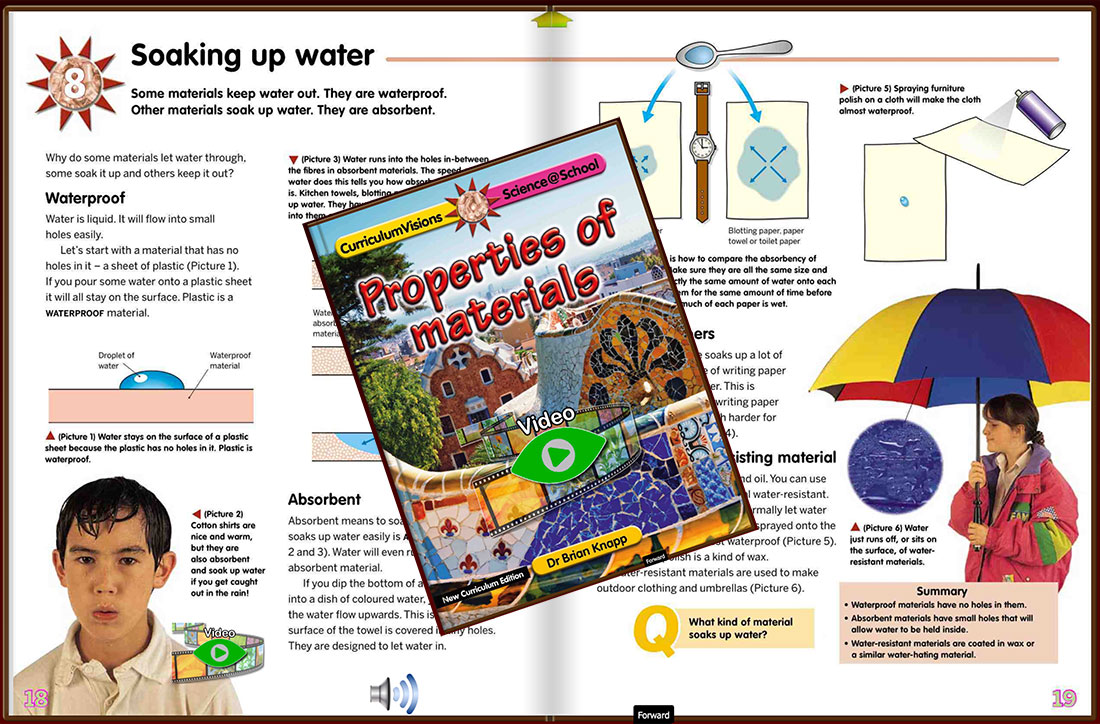
NOW LOOK AT THE TEXTBOOK
 OPEN THE BOOK