PLANNING VIDEO FOR TEACHERS
Ken's short guide for teachers — watch once, then use the steps below as a quick reminder.
- Get ready: Collect a few A4 sheets, an elastic band, empty drinks cans, cardboard food boxes (including an egg box if possible) and a breakfast eggshell.
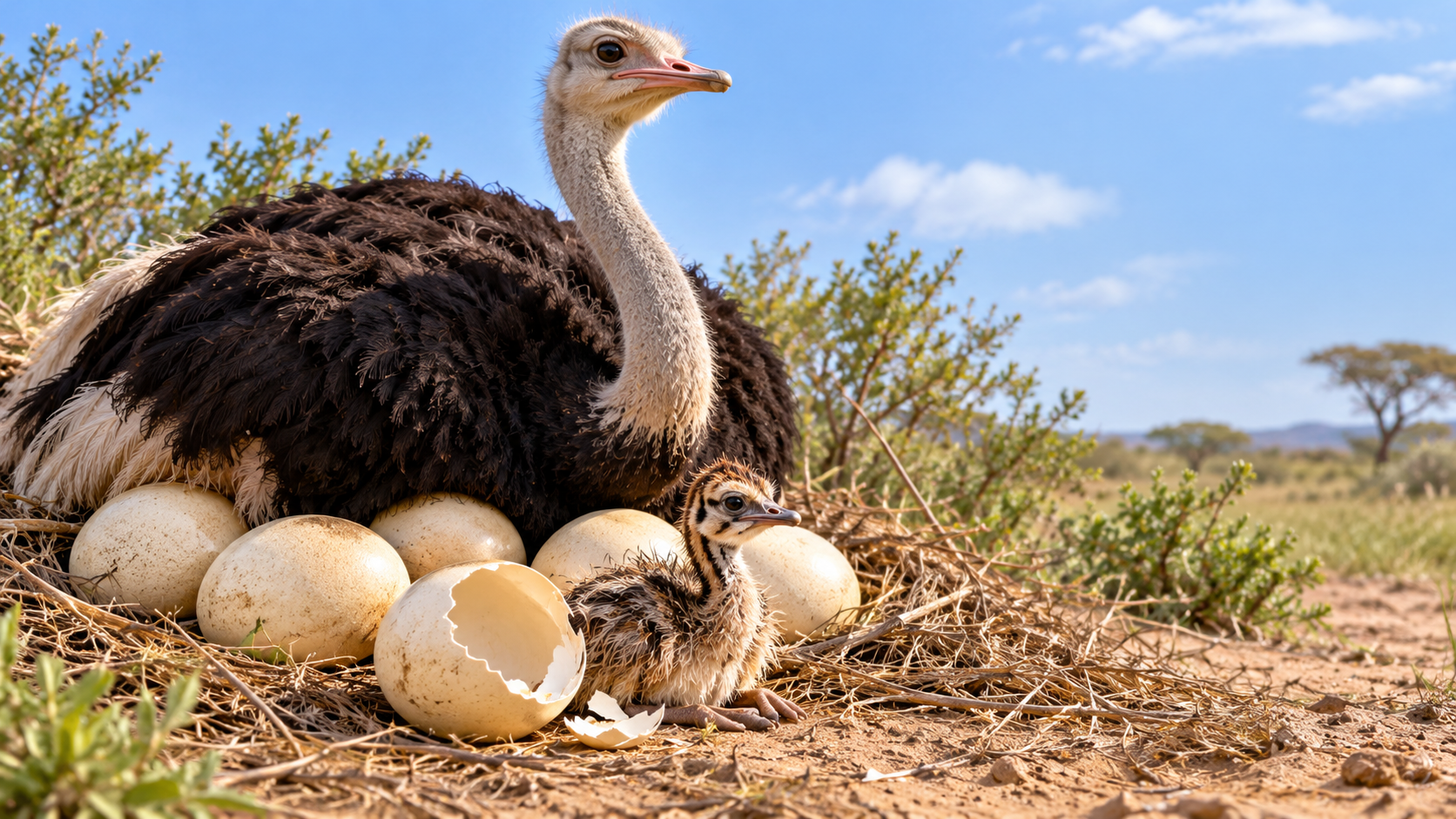
- Begin with the mystery: Show the thin eggshell, then the ostrich nest picture. Ask how an eggshell can support such a heavy bird without being crushed.
- Listen to predictions: Let children discuss or write their ideas. Explain that the shell material is naturally strong and its curved shape helps it resist squashing.
- Make a paper tube: Roll several A4 sheets into a hollow tube and secure with an elastic band. Stand it upright and invite children to press gently down on the top.
- Notice the shape: The paper is still made from wood fibres, but changing its shape has made the object surprisingly strong when pushed from above.
- Explore drinks cans: Feel how easily the thin aluminium sides bend, then compare with a gentle push down on an upright can. Discuss why cans can be stacked and why using thin metal saves resources.
- Investigate boxes: Examine food boxes and an egg box. Look at folds, sides, corners and shaped supports. Discuss how boxes can be stacked without collapsing.
- Compare directions: A tube, can or box may resist a push from above but bend more easily from the side. Introduce compression as a pushing or squashing force; pulling forces come in another lesson.
- Play Ken and conclude: Watch the main explanation, then use the Egyptian temple and eggshell challenge if appropriate. Reveal Ken’s final summary and use the textbook and library for further reading.
You're the teacher. Ken is here to help. Choose the activities that suit your class.
Strong
Words to learn: strong • shape • load • compression
WHAT IS THE PROPERTY?
Strong materials resist forces, but the shape of an object can also help it resist being squashed.
HOW CAN WE TEST IT?
Try a hollow paper tube, an upright drinks can and shaped cardboard boxes. Compare pushing from above and from the side.
WHY DOES IT MATTER?
Useful shapes let us make strong packaging from less material, saving resources and reducing waste.
1. WATCH KEN EXPLAIN
2. CAN YOU MEET THIS CHALLENGE?
Ken challenges you to investigate how eggshell shapes support weight, then connect your discovery to the many columns of an ancient Egyptian temple.
TRY THE CHALLENGE
Investigate how different shapes help objects resist being squashed.
OPEN THE CHALLENGEENGLISH — READING, WRITING & DISCUSSION
Explore a story or adventure and use it for discussion, retelling or writing.
OPEN THE STORY3. LET'S SUMMARISE WHAT WE'VE LEARNED
NOW LOOK AT THE TEXTBOOK
 OPEN THE BOOK