PLANNING VIDEO FOR TEACHERS
Ken's short guide for teachers — watch once, then use the steps below as a quick reminder.
- Get ready: Collect a glazed ceramic dinner plate, a small glass jar with a lid, sugar cubes, sandpaper, a block of softwood, a nail and a steel thumbnail. Optional: sugar-coated sweets.
- Start with ideas: Ask what hard and soft mean. Children write their ideas, then consider whether tough and weak mean the same things.
- Predict: Show the objects. Ask which are hard or soft and how the children could test their predictions.
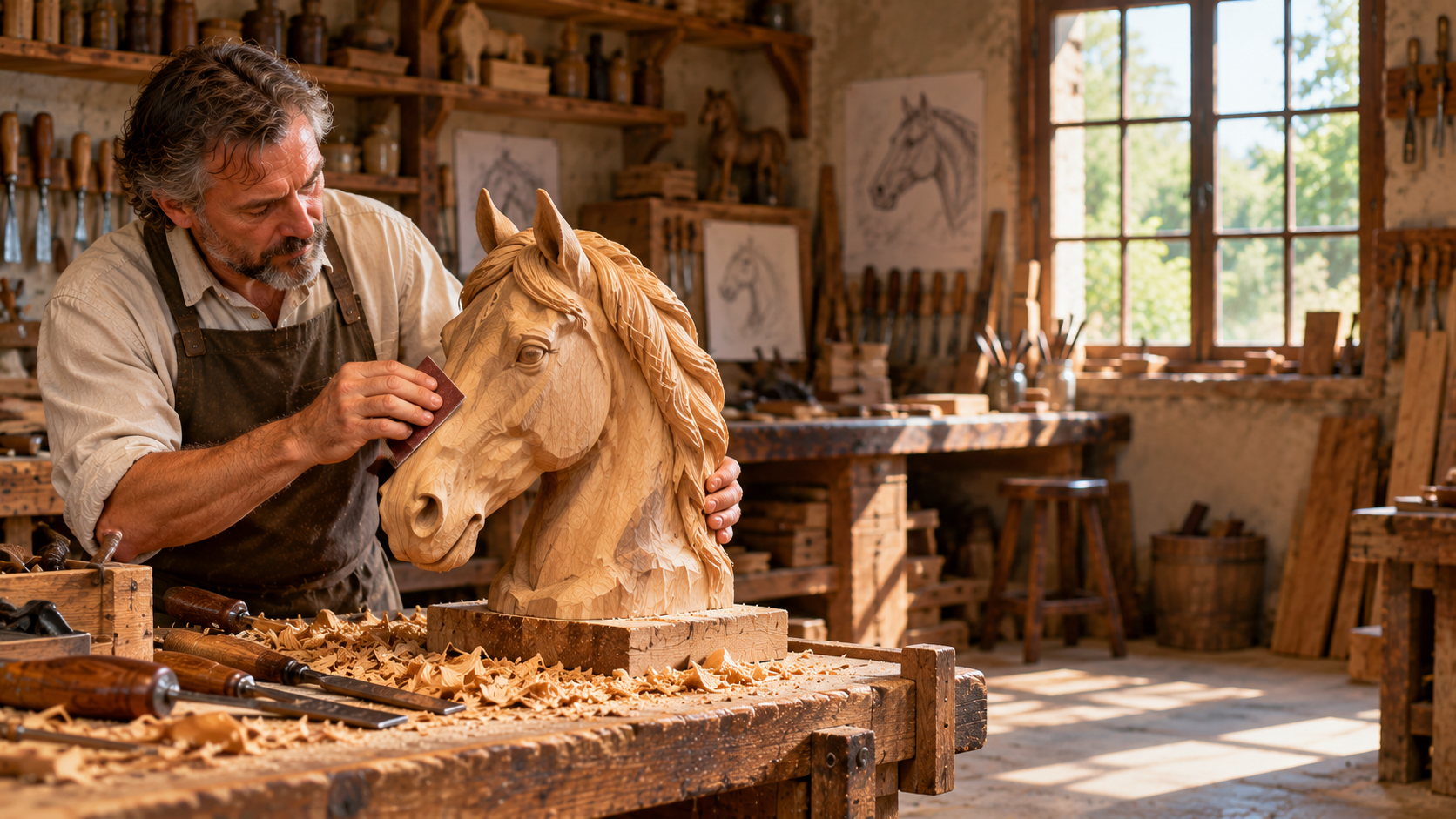
- Investigate shoe soles: Ask children to examine the worn tread on their shoes. Which is harder — the pavement or the sole?
- Try a scratch test: Use the steel thumbnail on softwood, then on the glazed dinner plate. What scratches, and what does not?
- Explore wear: Rub the wood on sandpaper and look at the sawdust. Shake sugar cubes in a lidded jar to see their corners become rounded; connect this with river and beach pebbles.
- Finish the investigation: If using sweets, discuss the hard coating and what happens when teeth crush it.
- Play Ken’s main lesson: Reinforce hardness and introduce why some hard materials can also be brittle.
- Extend and conclude: Use Ken’s sandpaper challenge to explore useful tools, then reveal the lesson summary.
- Explore the textbook: Use the illustrated textbook to reinforce the science and discuss how materials are chosen for different jobs.
- English in Science: Open Toby’s No Way Out! adventure. Listen together, then invite children to explain how knowledge of materials helps the characters escape. Use the story for reading aloud, retelling, discussing choices and evidence, analysing the illustrations, and creative writing. Choose the activities that suit your class.
- Further reading: Finish with the library so children can follow their own interests and explore the science further.
You're the teacher. Ken is here to help. Choose the activities that suit your class.
Hard or soft
Words to learn: hard • soft • scratch • dent
WHAT IS THE PROPERTY?
Hard materials resist scratching. Softer materials are more easily scratched or worn away.
HOW CAN WE TEST IT?
Look at worn shoe soles, try scratching wood with a steel thumbnail, and see how sandpaper wears wood away.
WHY DOES IT MATTER?
We choose materials for shoes, tools and plates because of how they resist scratching and wear.
1. WATCH KEN EXPLAIN
2. CAN YOU MEET THIS CHALLENGE?
Ken shows how a pile of sand becomes useful sandpaper, and how the design of tools helps us use material properties.
TRY THE CHALLENGE
Use what you have learned to investigate hard and soft materials.
OPEN THE CHALLENGE3. LET'S SUMMARISE WHAT WE'VE LEARNED
NOW LOOK AT THE TEXTBOOK
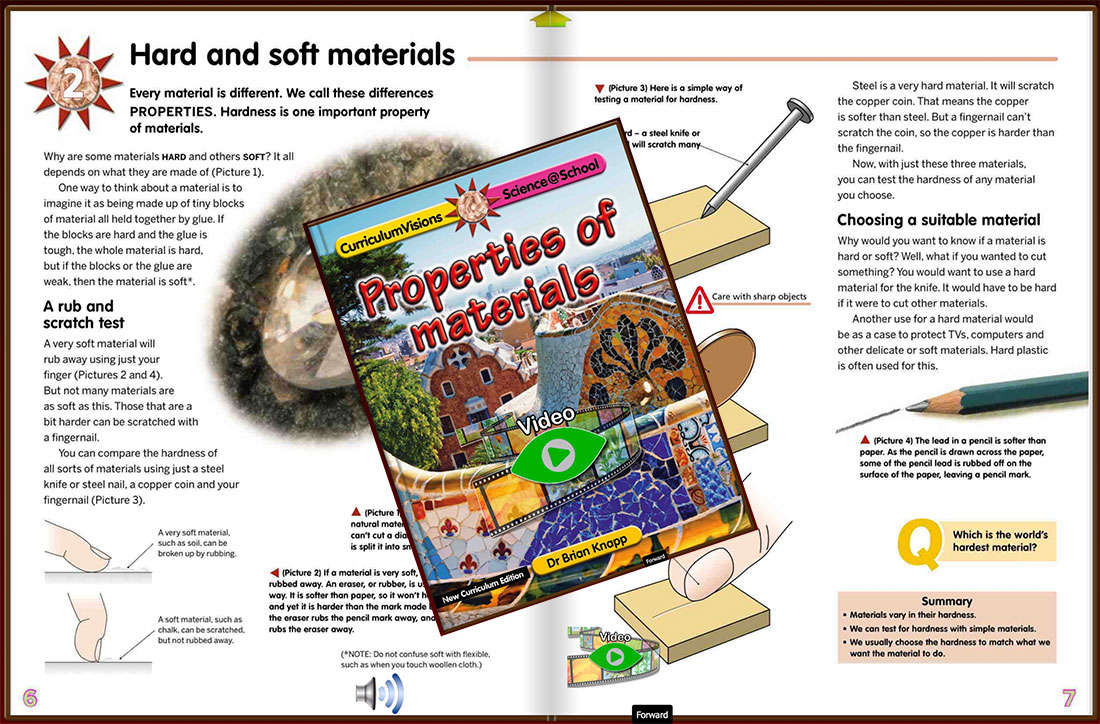 OPEN THE BOOK
ENGLISH IN SCIENCE
English and science are not separate subjects. They work together — as this amazing story shows.
No Way Out!
How can they get out of the magic maze?
Follow the adventure and discover how knowing about materials can help the children escape.
OPEN THE STORY